Cleanouts
An Estate Cleanout Checklist That Respects the Family
Clearing a family home is not a logistics problem with feelings attached. It is an emotional process with logistics attached.
Before anything leaves the house
Nothing leaves the property until the legal side is settled. If the estate is in probate, or if there is any disagreement among heirs, talk to the attorney before the container arrives rather than after.
- Confirm who has legal authority to dispose of the contents
- Locate the will, deed, titles, insurance policies and financial records
- Photograph every room before anything moves
- Agree among the family who wants what, in writing if there is any tension
- Check whether anything is specifically bequeathed
- Have anything potentially valuable appraised rather than guessed at
The four-pile method
- Keep. Family members are taking it. Label it with a name.
- Sell or donate. Set a deadline — if it has not gone by then, it moves to disposal.
- Dispose. Into the container, or to the appropriate county route.
- Special handling. Documents to shred, medications, firearms, chemicals, electronics, appliances, tires and batteries.
Nothing goes into a fifth "decide later" pile, because the decide-later pile grows until it swallows the project.
⭐ Start in the basement
Local advice that differs from a national checklist.
Every house here has a basement, because frost goes deep enough that you are excavating that far anyway. In a long-occupied family home the basement is the project. Start there, in this order:
- Chemicals, paint, fuel and unlabelled containers out before anything else moves. Once boxes are stacked in front of a shelf, the shelf gets forgotten.
- ⚠️ Book the hazardous waste appointment now — it is appointment-only and needs at least a day's notice. Count the used oil and antifreeze: five gallons or less needs no appointment.
- Set the latex paint out to dry. It is not accepted at the hazardous site; dried solid, it goes in the container.
- Find every refrigerant appliance. The kitchen fridge is obvious; the chest freezer in the basement is the one that gets missed every time.
- ⭐ The old mechanical plant and all the scrap metal. Furnace, water heater, softener, radiators, pipe. Banned from the container, and free to drop at the county.
- ⚠️ Look at pipe lagging, furnace cement, floor tile and vermiculite before anyone touches them. In a pre-1980 house they may contain asbestos, and the county needs 24 hours' notice for it.
- ⭐ Then the cardboard and paper, which is banned from landfill and which a long-occupied basement holds in startling quantity.
- Then the stored contents, which is the real volume.
Paperwork worth looking for here
Things a national checklist would not mention:
- ⭐ Paper mill and manufacturing pension records. Generations of families here worked the mills at Rothschild and Mosinee, the insurance offices, and the manufacturers out in Stratford and Marathon City. Pension and benefit paperwork from a long career is worth real money and is easy to bin.
- Farm and land records. This is dairy country — deeds, leases, drainage agreements, crop and milk records.
- Timber and woodlot records. Managed forest agreements run with the land here and matter to whoever inherits it.
- Union records and membership books from the mills and the trades.
- Cabin and lake property deeds, which turn up loose in drawers remarkably often.
- Co-op and creamery membership records, which can carry equity.
- Military discharge papers, and burial plot deeds.
None of it looks important in a drawer. All of it is worth checking before a box goes in a container.
Things people throw away and regret
- Paperwork not checked. Savings bonds, share certificates, policies, deeds and cash turn up inside books, tins and drawers with real regularity.
- Photographs, slides and negatives. Once gone, gone.
- Tools. Hand tools and workshop equipment are collected seriously, and a well-kept basement workbench often holds decades of quality.
- Hunting and fishing gear. Central Wisconsin households accumulate serious equipment and it has real value.
- Mill and industrial memorabilia — company anniversaries, signage, service awards. There is a genuine local market.
- Quilts, linens and handwork, routinely bagged for the charity shop without anyone asking.
- Letters and family records in German, Polish or Hmong, which nobody in the current generation reads. Have someone look before they go.
The five-minute rule. Before any container of paper, any book, any tin and any item of furniture goes in the dumpster, someone opens it and looks. It slows the job down and it is worth it every single time.
⚠️ What the local rules and rates require
An estate clearance runs into every rule and every rate this market has, all at once:
- ⭐ Scrap metal is free to drop and it is banned from the container. A long-held house produces a great deal of it.
- Appliances and electronics — banned by state law and priced per item at the county. A long-held house usually has three or four appliances.
- Tires — priced per tire, and farm tires cost considerably more than car tires.
- Cardboard, paper, cans, glass bottles and #1 and #2 plastics — banned from Wisconsin landfills.
- ⚠️ Hazardous material — appointment only, free to Marathon County residents and full cost to everyone else. That matters if the house is in Medford, Antigo, Wittenberg or Stevens Point.
- ⭐ Fluorescent tubes — priced each, ⚠️ limit 50 per load. A workshop or a basement shop can exceed that.
- Mattresses — landfill items here, charged as regular garbage. Budget for them on a multi-bedroom house.
And never in a container: paint, solvents, fuel, garden chemicals, propane cylinders, medications, firearms and ammunition, refrigerant appliances that have not been evacuated, and ⚠️ asbestos.
Where the local routes fit
- ⭐ Marathon County Solid Waste, 172900 State Highway 29, Ringle — Mon–Fri 7:00 a.m. to 3:00 p.m.; Sat 8:00–11:30 a.m. May to October. Scrap metal free, used oil free, everything else on the published sheet.
- Household hazardous waste, same site, ⚠️ appointment only — the detail is here.
- Habitat for Humanity and similar take donated cabinets, fixtures, furniture and appliances. Worth a call before a usable kitchen is destroyed.
- A scrap yard rather than the county, if you want paying for the metal rather than just disposing of it free.
- The container for everything else, which on an estate clearance is still most of it.
Sizing, access and coming from out of town
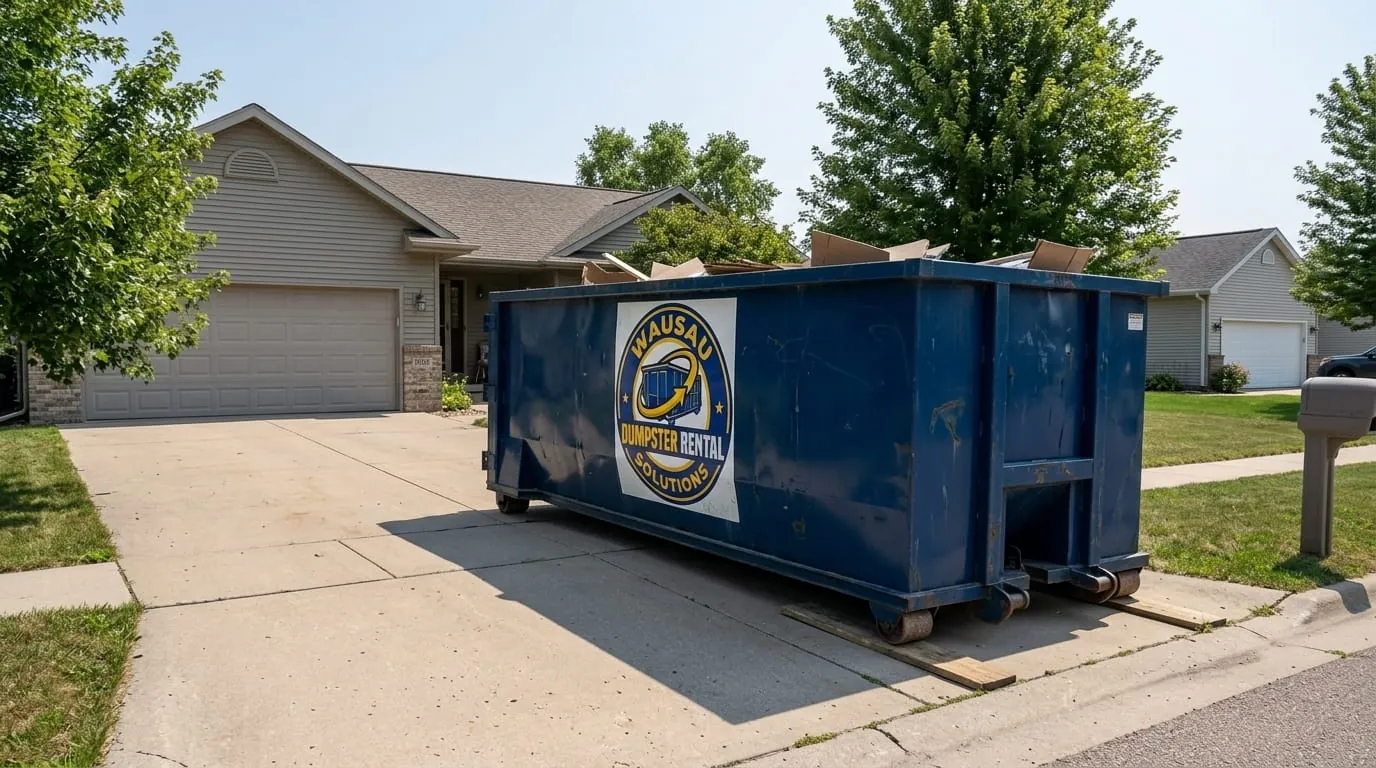
- Small apartment or condo: 15 yard
- Two to three bedroom house, basement not included: 20 yard
- ⭐ House with a full basement: 30 yard, or a 20 with a swap
- Long-held family home, everything going: 30 yard, and plan for a second
- ⚠️ Older Wausau or Schofield lot: size down — a 30 may not fit the drive
- ⚠️ Sloping drive: size down, and tell us which way it falls
- Farm property with outbuildings: phased 30 yards, metal pulled first
Household contents are bulky and light, so these jobs generally size up — but pulling the metal, the appliances and the cardboard changes that considerably. We schedule estate work with longer rental windows as standard.
A common situation here: families stay in this county for generations, but the children often do not. If you are travelling in to clear a parent's house in a single week, tell us the dates when you book. We will have the container there the day you arrive rather than three days into a week you cannot extend, and we will schedule the swap before you need it.
Four notes for a compressed visit: book before you travel; call the hazardous waste site on day one, because the appointment needs a day's notice and the week is short; measure the driveway and tell us about any grade; and if it is winter, arrange for the drive to be cleared and salted before the container arrives.
Need a container in Wausau?
Call and describe the job. Three minutes on the phone gets you a size recommendation, a flat rate and a delivery window — and we will tell you if a smaller, cheaper container is the right answer.
Call (715) 814-9498